The European Mobility Pact shall enter into force on 21st February 2022. Our country, like other eastern countries, such as Bulgaria, Poland and Lithuania with a major economic interest in the freight transport market for a fee, has challenged various regulations of the European Mobility Pact including: the obligation to return the trucks home (at the base) within 8 weeks, the obligation for drivers to return home and the banning of normal weekly rest in the cab; wishing to repeal the (so-called) discriminatory regulations.
The perspective on the impact of this new legislation differs, therefore we cannot say whether it is discriminatory, because certain regulations may improve the quality of life of drivers, as well as the quality of the transport service provided, but at the same time can hinder the development of business in this field, due to the higher costs of transport and a lower profit.
The decrease in profit for transport operators following the provision of community transport shall be proportionate to the possibility of a decrease in drivers’ income, as the salaries will be affected by the adjacent costs resulting from the payment of accommodation, hence working conditions may be relatively better, but the costs will be higher, and the final profit/income will decrease for all parties involved.
The increasing regulation of freight transport for a fee will also affect the small tonnage vehicles in the future, namely vans with MATW (maximum authorized total weight) of 3.5T, for which the European authorities will provide in the coming months of this year, the endowment with tachographs. The multiple regulations provided for throughout the entire European Union will be reflected in the high prices of the transport service, which will subsequently affect the final buyer, the price of the products becoming a few percent higher for the final buyer.
In addition to costs, vehicle wear is expected to be higher, because the trucks will have to travel extra distances that have become mandatory, such as the road travelled every 8 weeks to return to base. Our country is not a member of the Schengen area; thus, it will face overcrowding at the customs office due to these additional roads after which the general transit of the border crossing points may be hindered.
Additional roads will be covered, with several kilometres travelled resulting in higher fuel consumption as well as higher emissions. Therefore, these political measures may have an ecological impact, as pollution affects the quality of life of Europeans.
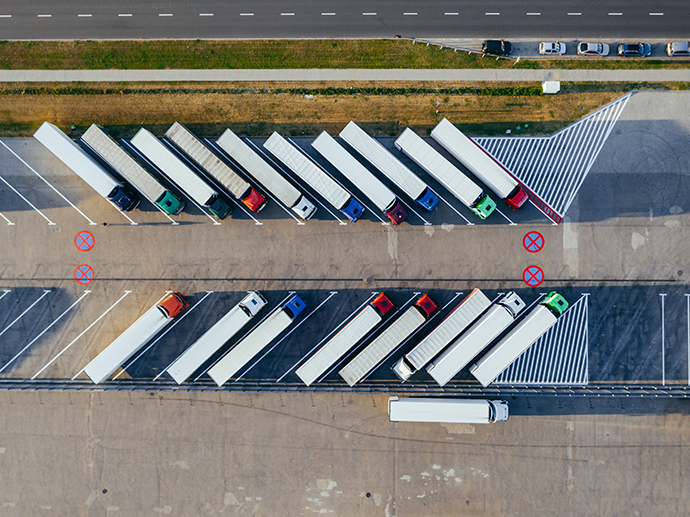
The new mobility pact stipulates that the driver no longer sleeps in the cab of the truck but at the hotel, therefore the vehicle will remain parked on the outskirts of major European cities regardless of the value of the goods transported. New truck parking facilities must be built throughout the Community, as well as equipping existing ones with guards and surveillance cameras, because the safety of the goods transported must not be neglected. The whole of Europe, especially the west of the continent, is facing a high level of offenses against carriers, which are targeted due to the vulnerability during the night as well as the transported values; the theft of goods, the cutting of tarpaulins and other similar acts of crime are common. The logistics field will undergo changes, the mobility pact being an act that will redefine the field of freight transport. Adaptability will be a necessary quality on the road to success of Eastern European carriers. Now, the impact is purely economic, being related to the implementation costs of the mobility pact, which may be higher than the expected profits at least in the mid-term, as well as its long-term benefits. It remains to be seen how the long-term European transport market will transform or reform economically and socially as a result of these changes of strategic importance.